Renovating a Historic Italian Apartment Without Losing Its Soul

Paola Colonna
Interior Designer
June 14, 2026 · 8 min read
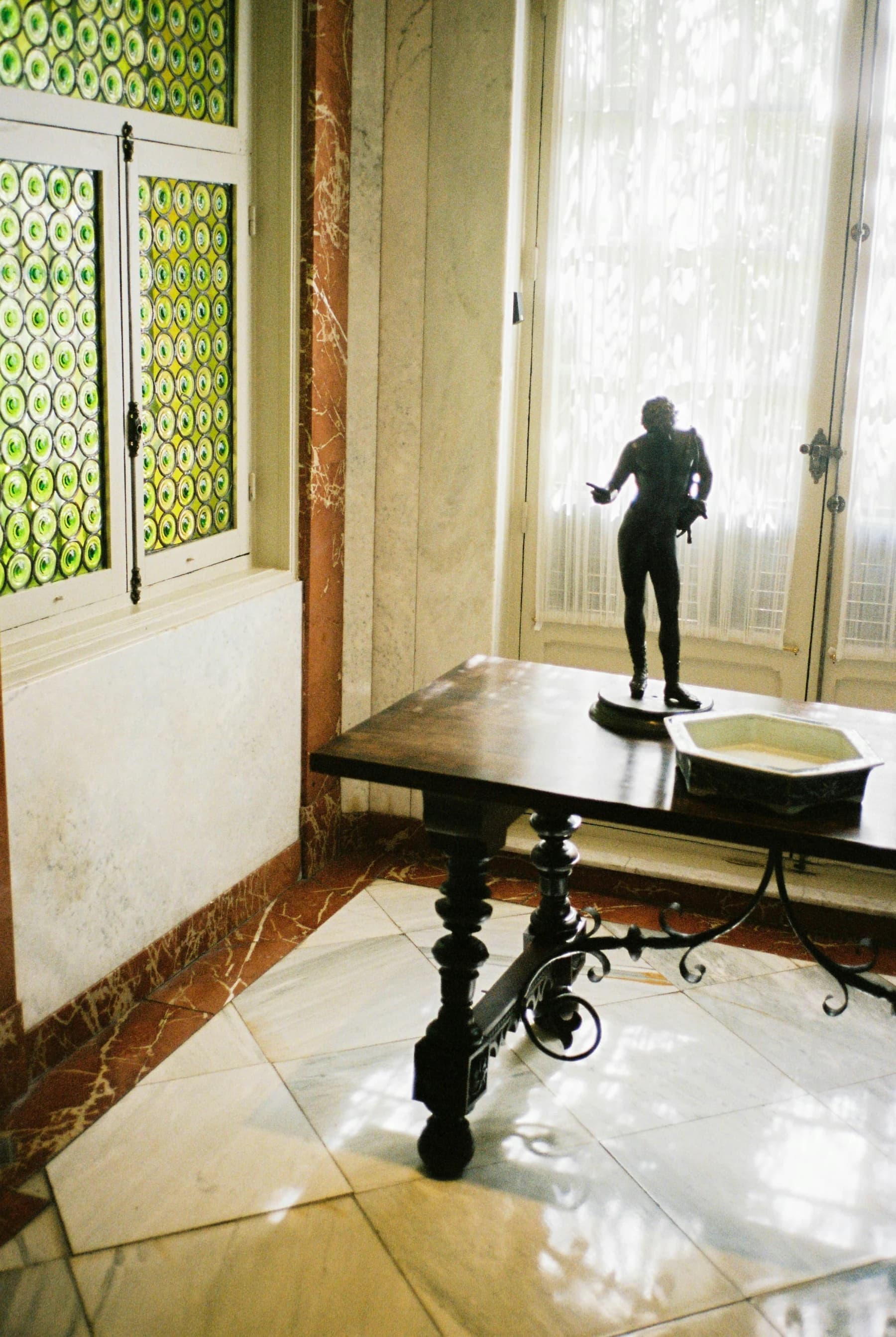
Renovating an apartment in a historic Italian palazzo is not like renovating any other apartment. It is not only a matter of materials or style: it is a matter of relationship with the building. A nineteenth-century palazzo has its own logic, language, and constructive rhythm that preexists your project and continues after it. Your intervention — however radical or gentle — is one episode in that structure's history, not its final chapter.
When I design within a historic building, the mental posture I try to maintain is one of dialogue, not domination. This does not mean being conservative at all costs: it means understanding first and deciding second. And understanding what has value — what is specific to this building, unrepeatable — is the essential first step.
Identify What's Worth Keeping
Not everything old deserves to be preserved, and not everything that looks damaged is lost. The first phase of any project in a historic apartment is a careful reading of what exists.
Ceilings and moldings. Decorated ceilings with plaster cornices, ceiling roses, friezes, or coffered panels define the apartment's character immediately. Restoring them is expensive — it requires specialized craftsmen, lime plaster, and patience — but the result is incomparably different from any modern ceiling. If the moldings are partially deteriorated, it is often possible to integrate missing sections with casts or hand modeling.
Boiserie and wood paneling. Floor-to-ceiling wood paneling or lower lambris is another element of value that often disappears in hurried renovation work. It can be stripped, repainted, restored; it is rarely worth removing unless structurally compromised.
Original wood windows and doors. The original windows and interior doors in solid wood — often fir, poplar, or chestnut — have lower acoustic and thermal performance than modern frames, but they have a profile, a texture, and an ability to hold the character of a room that new ones simply cannot replicate. In most cases, restoring the existing window (with better seals, double glazing where the rebate allows, fresh paint) is preferable to replacement.
Period floors. Cement tiles, terrazzo, cotto, marble: as I explain in the guide to period floors, these materials are almost always restorable and almost always worth restoring. Losing the original floor of a historic apartment is one of the most difficult losses to justify — and one of the hardest to recover from, financially and aesthetically.
Interior doors. The tall interior doors — often double-leaf, with mirrors and wood cornices — are a distinguishing mark of nineteenth-century Italian interior architecture. Replacing them with standard modern doors almost always impoverishes the apartment without solving anything.
Heritage Constraints and Permits, Briefly
The question I am most often asked is: "Can I do what I want inside?" The answer, in many cases, is: it depends.
In Italy, the fundamental distinction is between buildings that are formally listed (vincolati) under the Soprintendenza ai Beni Culturali and buildings in a historic center that are not formally listed but are subject to local planning regulations. The interiors of listed buildings are subject to stricter oversight: any intervention that alters original decorative elements — moldings, floors, boiserie — requires prior authorization.
Even in non-listed historic buildings, many interventions require municipal permits: removing walls, moving bathrooms and kitchens, opening new window openings. The boundary between ordinary maintenance and structural renovation has different implications for permits and tax relief.
The practical advice I always give: before buying a historic apartment, and before starting any work, engage a qualified professional (architect or surveyor) who can do a site assessment and verify the heritage status. The cost of that preliminary consultation is nothing compared to the cost of having unauthorized work reversed. For a full picture of renovation costs and permit processes, renovation costs in Italy is a reliable reference.
Old Meets New
The design principle I find most effective in historic apartments is declared contrast. Do not try to replicate the historic style with new materials — this rarely succeeds and always reads as imitation. But do not ignore the context with an intervention that seems to have landed from another building entirely. The right balance is clarity: new elements should be unmistakably new, and in respectful relationship with what exists.
Concrete examples of this principle at work:
Minimal kitchen beneath a frescoed ceiling. A completely white kitchen with handleless doors and a stone countertop, under a ceiling with plaster cornices and a painted ceiling rose. The contrast is strong, but the quality of both elements sustains it. What does not work is the faux-rustic dark wood kitchen with carved panels: it is not contemporary enough to create productive contrast, and not authentic enough to read as coherent.
Period floor with a contemporary bathroom. Keeping the terrazzo in the entrance hall and corridor, using large marble or concrete slabs in the new bathroom: the transition is managed through the quality of the material rather than through attempted matching.
Modern lighting, original ceilings. Discreet recessed spotlights, minimalist wall sconces, contemporary blown-glass pendants: all elements that illuminate high decorated ceilings beautifully without competing with them. What to avoid: highly "design-forward" contemporary fixtures that draw attention away from the ceilings, or exposed bare bulbs that break the decorative rhythm.
Hiding Modern Systems
One of the most technically delicate aspects of a historic renovation is making modern building systems — heating, electricity, network, air conditioning — coexist with original surfaces.
Underfloor heating, which requires raising the floor level by 8–12 cm, is often incompatible with period floors and with the thresholds of historic doors. In many historic apartments the solution is to return to radiators — or to choose radiant ceiling heating, which does not touch the floor. If underfloor heating is desired, it is essential to verify that the existing floor structure can bear the additional weight of the screed.
Electrical wiring in a historic apartment ideally runs in channels cut into the walls, with flush-mounted boxes. This requires scaffolding, dust, and longer works than anticipated. Where walls are frescoed or decorated, wall channels are impossible: the alternatives are surface-mounted conduit in secondary areas, or a design that minimizes the number of outlets on walls of significance.
Air conditioning is the thorniest point. A wall-mounted split unit is often the economical solution, but the indoor unit is difficult to conceal in a room with decorated ceilings. More elegant solutions — ceiling cassette units, ducted systems, high-wall units — cost more but integrate far better.
Materials and Palette
In a historic apartment, the starting material is what already exists. The palette is not built from scratch: it is built in relation to the colors of the floor, the moldings, and the existing joinery.
The rule I find myself applying consistently is this: new materials should have a material affinity with the existing ones. Marble and lime, wood and stone, plaster and copper — combinations of natural materials with similar visual density and temperature. What creates dissonance is not the contrast between old and new, but between natural and synthetic: a high-gloss Corian countertop against a stucco ceiling, or a vinyl "marble-effect" floor in a corridor with original terrazzo.
Paint choices for historic apartment walls must often respond to the existing lime wash: layers of colored calce that, in some apartments, are part of the character itself. Before repainting, carry out a sample in a less visible area and observe it over a few days.
Mistakes That Destroy Value
Certain interventions in a historic apartment do not merely fail to improve things — they permanently and irreversibly reduce value.
Removing original floors. Already discussed: this is the most irrecoverable loss. An informed buyer notices immediately and prices it into the offer.
Replacing wood windows with standard PVC or aluminum. Modern windows can offer better thermal performance, but they clash visually in ways that are often impossible to correct later. If thermal performance needs to improve, there are wood-aluminum composite options or slim-profile aluminum windows with thermal breaks that respect the building's character far better than standard casements.
Over-modernization. Opening up the entire floor plan, removing the tall interior doors, replacing boiserie with drywall, lowering the ceiling to hide beams: interventions that transform a historic apartment into a modern one trapped inside a historic body. The result is almost always unsatisfying in both directions.
Acrylic paint over historic plaster. The walls of historic apartments often carry lime-based layers that breathe. Covering them with impermeable acrylic paints seals the surface, causing damp problems and detachment over time. Always use silicate or lime-based paints.
For the specific context of central Rome — where these buildings are most concentrated and the constraints are most particular — apartments in central Rome adds the local layer to everything discussed here. And if you are buying rather than renovating an existing property, buying a home in Italy covers the purchase process and what to look for before committing.
Renovating a historic building is a privilege and a responsibility in equal measure. The privilege is living in a place with history — with materials and proportions that are no longer made. The responsibility is leaving it a little better, or at least no worse, than you found it.
Let's talk about your project — the first consultation is free.
Request a free consultationAbout the author

Paola Colonna
Interior Designer
Paola founded ATRIA from a passion for harmonious spaces. She leads interior design with a careful, personalized approach to materials, fabrics, and Italian craftsmanship.
Related articles
Italian Building Permits: CILA, SCIA & Permesso
A clear guide to Italian building permits: how edilizia libera, CILA, SCIA, Super SCIA and the permesso di costruire differ, plus timelines and amnesties.
July 15, 2026 · 14 min read
Apartments in Central Rome: A Renovation & Design Guide
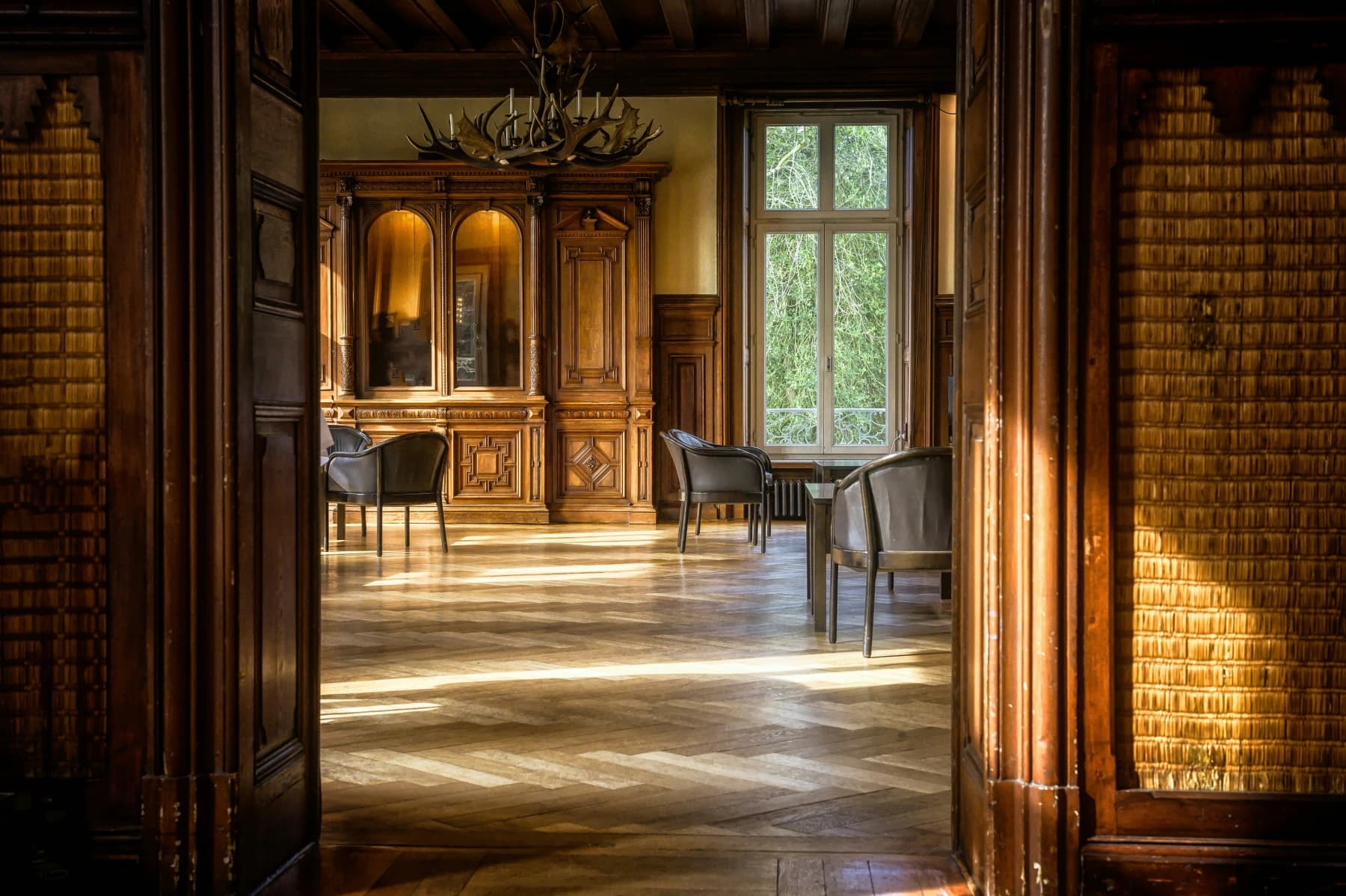
Heritage rules, light, and compact layouts: how to design and renovate an apartment in central Rome.
June 21, 2026 · 8 min read
What a Home Renovation in Italy Really Costs
Realistic budgets for Roman apartments, Tuscan farmhouses, and coastal villas — permits, labor, and hidden costs.
June 10, 2026 · 2 min read
Ready to start your Italian project?
Whether you are buying, renovating, or furnishing, ATRIA guides you every step with a bilingual team on the ground.
Request a consultation