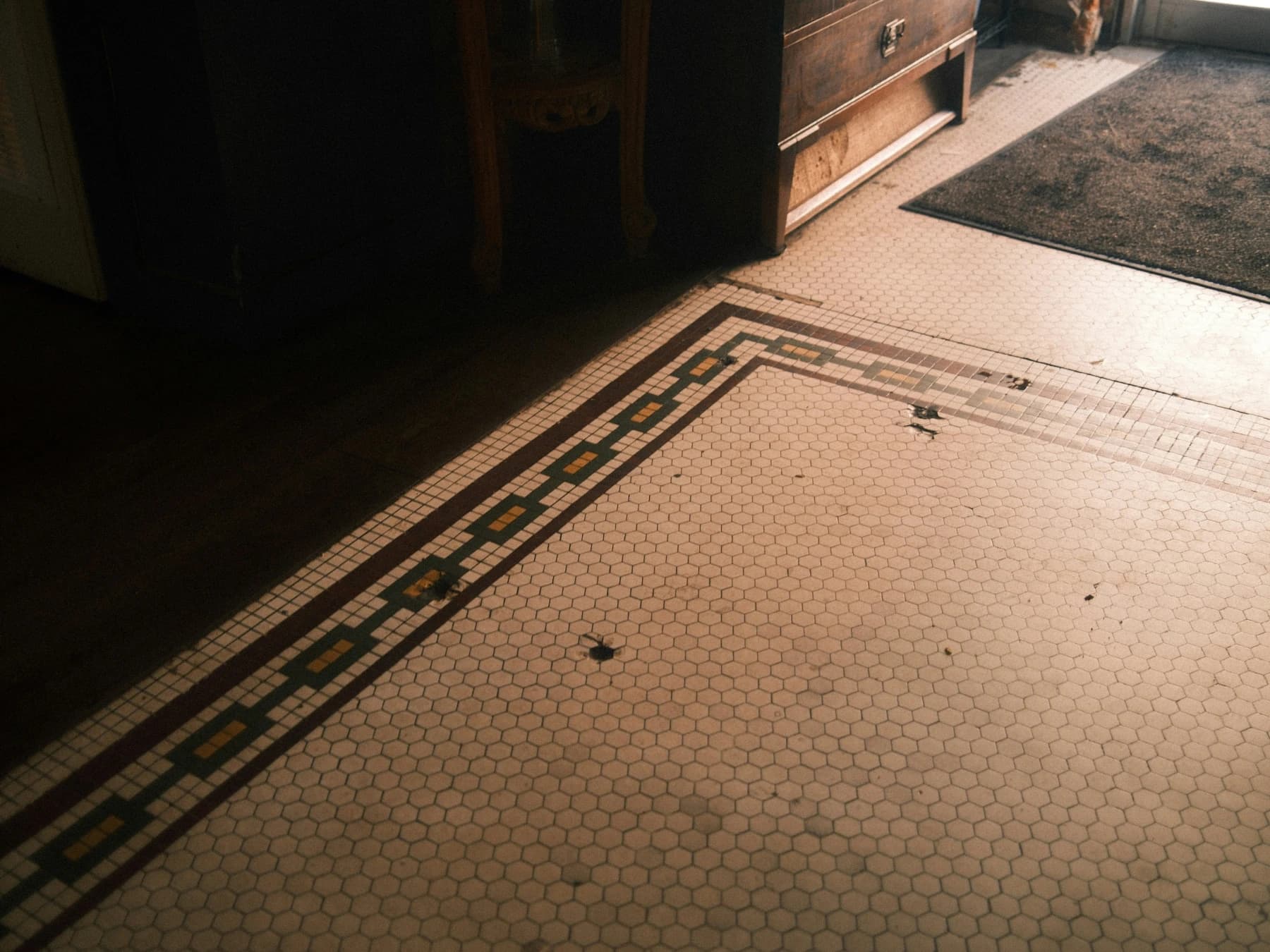
Restoring Period Floors: Cementine, Terrazzo & Cotto

Paola Colonna
Interior Designer
May 24, 2026 · 8 min read
The floor is often the most valuable thing in a period Italian apartment — not in terms of appraisal value, but in terms of character. Those patterned cement tiles, that two-tone terrazzo, the cotto bricks worn soft by a century of use: these are things a new building cannot replicate, however hard it tries. When I walk into a historic apartment and find the original floor still intact, my first feeling is always relief. When I see it buried under 1990s laminate — or worse, removed entirely — there is a moment of quiet mourning.
What I find myself explaining to clients regularly is this: the period floor is not an aesthetic problem to solve. It is a design opportunity to use. And to use it well, you first need to understand what you have.
Know Your Floor
Before deciding anything — restore, integrate, or replace — you need to identify the floor type and its actual condition. Each material has its own history, its specific vulnerabilities, and a different restoration path.
Cementine — Encaustic Cement Tiles
Cementine (also called hydraulic tiles or encaustic cement tiles) are pressed tiles made from colored cement layers, without firing in a kiln. Typical of the late nineteenth and early twentieth centuries, they are recognizable by their geometric or floral patterns created by pouring different-colored cement into molds. Their surface is not glazed: the color lives in the material itself, which makes them vulnerable to abrasion — but also fully restorable by grinding and polishing.
Over time they lose their sheen, develop a milky haze, and sometimes chip or crack in high-traffic spots. The good news is that restoration is almost always possible, even in badly worn condition: stone-polishing and the application of specialized impregnating sealers can bring back colors that appeared lost for good.
Graniglia and Terrazzo
Graniglia — also known as Venetian terrazzo — is a poured-in-place floor made by embedding marble or stone chips in a cement binder. Once set, it is ground smooth until the colored granules emerge like points of light against the matrix. It is the period floor of choice in Roman and Milanese palazzi from the 1920s through the 1950s.
Terrazzo is exceptionally durable and, if intact, needs only periodic polishing to look its best. The most common problems are cracks (from building settlement) or areas of detachment. Patching is technically feasible but requires a skilled craftsman, because matching the existing granule blend is genuinely difficult — almost an art form.
Cotto
Cotto — literally "fired" — is fired-clay tile or brick, typical of Tuscan farmhouses but present in historic homes throughout central and southern Italy. Its visual warmth is inimitable: those reds, ochres, and earth tones softened by time create a sense of rootedness that no modern product comes close to replicating.
Restoration involves deep cleaning, repointing the joints (with lime mortar, never gray cement), and application of a natural oil or wax as protection. Avoid synthetic gloss resins — they seal the material and betray its porous, breathing nature. The principal risk with cotto is crumbling in damp environments: always assess rising damp before any intervention.
Marble and Stone
Marble, travertine, and local stone are found mostly in the piano nobile floors of historic palazzi — entrance halls, reception rooms, bathrooms. Marble is the most durable but also the hardest to patch, because color and veining vary from slab to slab and age in ways that cannot be replicated.
Marble restoration — grinding, then polishing to a mirror or satin finish — should be entrusted to a specialist in stone surfaces. Stubborn stains (rust, limescale, old wax residue) require material-specific products; generic cleaners can permanently damage the surface.
Antique Wood
Period parquet — often in oak, walnut, or chestnut — is less common in Italian historic homes than in northern Europe, but present in country houses and some noble palazzi. The natural patina that time builds on old wood is something modern distressed finishes imitate with limited success.
Restoration means sanding (often by hand, to avoid removing too much material from thin old boards), filling knots and cracks with a tinted paste, and finishing with oil or pigmented wax. Glossy synthetic varnishes should be avoided: they plastic-ify a surface that should breathe.
Restore or Replace?
The question I am asked most often is not "how do I restore" but "is it worth restoring at all?" My answer is almost always yes, for three reasons.
Patrimonial value. An apartment with original cementine or graniglia floors is worth more on the open market — not just because buyers are sentimental, but because they know these materials cannot be replicated. A two-bedroom in Prati with beautiful restored cement tiles sells differently from one with 2005 porcelain stoneware.
Irreplaceability. You cannot re-lay a period graniglia floor at a reasonable cost, and the result will not be the same. Vintage cementine tiles can be sourced (at antique dealers and from a few remaining craftsmen), but matching an exact pattern requires luck. Once removed, the original floor is gone.
Heritage constraints. In many buildings listed with Italy's cultural heritage authority (Soprintendenza), removing original floors requires an authorization process that in practice amounts to a refusal. It is better to know what you can and cannot do before committing to a plan. If you are buying in a historic center, read our guide on renovating a historic Italian apartment for the full picture on constraints.
There are cases where restoration is not worthwhile: if more than 40–50% of tiles are missing or broken, if there is unresolved structural rising damp, or if the floor level needs to change for plumbing or heating reasons. In these cases, the honest choice is to document the original floor (photographs, samples) and move forward with a material that matches the apartment's character — but never shiny faux-concrete porcelain.
How Restoration Works
The process varies by material, but the core sequence is similar across most period floors.
Layered cleaning. Years of wax, cleaning products, and deep-seated grime are removed with material-specific strippers, applied by hand rather than with aggressive machines. This phase reveals the floor's actual condition — often much better than it appeared under decades of buildup.
Repointing. Worn or missing grout lines are filled with lime-based mortar (never gray Portland cement, which produces a different color and creates tension). For cementine, the mortar is brought flush with the tile surface; for graniglia, patching is done by blending chips to match the existing matrix as closely as possible.
Grinding and polishing. Grinding removes a very thin layer of material to produce an even surface; polishing — with stone, wax, or specialized compounds — brings the desired finish, from satin matte to mirror-bright, depending on the material and the preference.
Protection. The final step determines how long the work lasts. Cementine need a water-based hydrophobic impregnating sealer; cotto needs natural wax or oil; marble needs a stone-specific protector; graniglia needs a breathable wax. The wrong products — epoxy resins, synthetic varnishes — seal the material and prevent it from breathing, causing problems over time.
Showcasing It in the Design
A well-restored period floor is already a design statement. The risk is doing too much around it. The principle I return to in my projects is subtract, not add.
If the floor has a strong pattern — geometric cementine, two-tone graniglia — the rest of the room needs to be quieter. Neutral walls, clean-lined furniture, textiles in tone: the floor becomes the protagonist, not one element competing against many. A classic mistake is covering a beautiful period floor with a large area rug. If the floor is beautiful, let it be seen.
Raking light brings out a floor's texture more than anything else. A row of adjustable low-mounted spotlights, or better yet wall sconces that project light downward, make cementine patterns and graniglia granules emerge in a way that overhead lighting cannot achieve. This pairs naturally with thinking about lighting the whole room.
The contrast with contemporary works better than total stylistic consistency. A teal cementine floor against a white linear kitchen is more interesting than the same floor with a fake-rustic dark-wood kitchen trying to match the period. Old floors hold up well against contemporary interventions; they struggle when surrounded by imitations of themselves.
Mixing Old and New
Often the apartment does not have original floors throughout: the bathroom was refaced in the 1970s, or the kitchen was extended with different materials. The question of transitions between period and new flooring is one of the most delicate moments in any renovation.
The temptation is to "match" — find something that looks similar to the original. This rarely works, because new materials age differently. The solution I prefer is declared contrast: a resin floor, a new cotto in a different format from the historic tiles, or a pale parquet — something that clearly reads as "this is new" rather than pretending to be old. Honest temporal distinction is more elegant than attempted falsification.
For more on floor choices in a renovation context, parquet vs. majolica tiles explores the decision between new floor options. For the budget side of restoration, renovation costs in Italy gives realistic estimates. And for the broader design context of apartments where these floors typically live, see renovating a historic Italian apartment and apartments in central Rome.
If you have a period floor and are unsure whether it is worth keeping — or how to make it work in a modern design — we are glad to take a look. Often thirty minutes on site, with the actual material in front of us, is enough to understand what can be done and what it would be a shame to lose.
Let's talk about your project — the first consultation is free.
Request a free consultationAbout the author

Paola Colonna
Interior Designer
Paola founded ATRIA from a passion for harmonious spaces. She leads interior design with a careful, personalized approach to materials, fabrics, and Italian craftsmanship.
Related articles
Italian Building Permits: CILA, SCIA & Permesso
A clear guide to Italian building permits: how edilizia libera, CILA, SCIA, Super SCIA and the permesso di costruire differ, plus timelines and amnesties.
July 15, 2026 · 14 min read
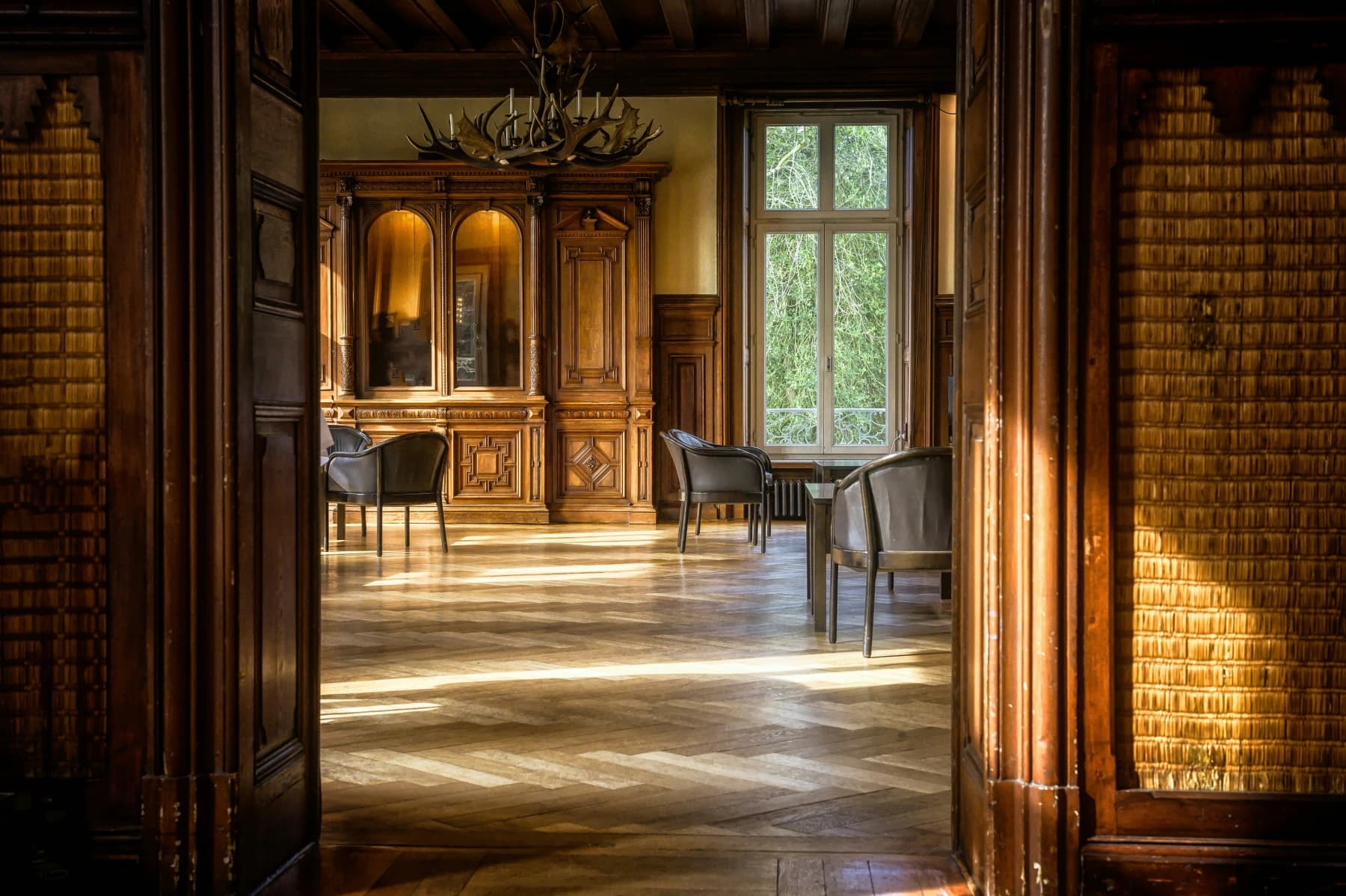
Apartments in Central Rome: A Renovation & Design Guide
Heritage rules, light, and compact layouts: how to design and renovate an apartment in central Rome.
June 21, 2026 · 8 min read
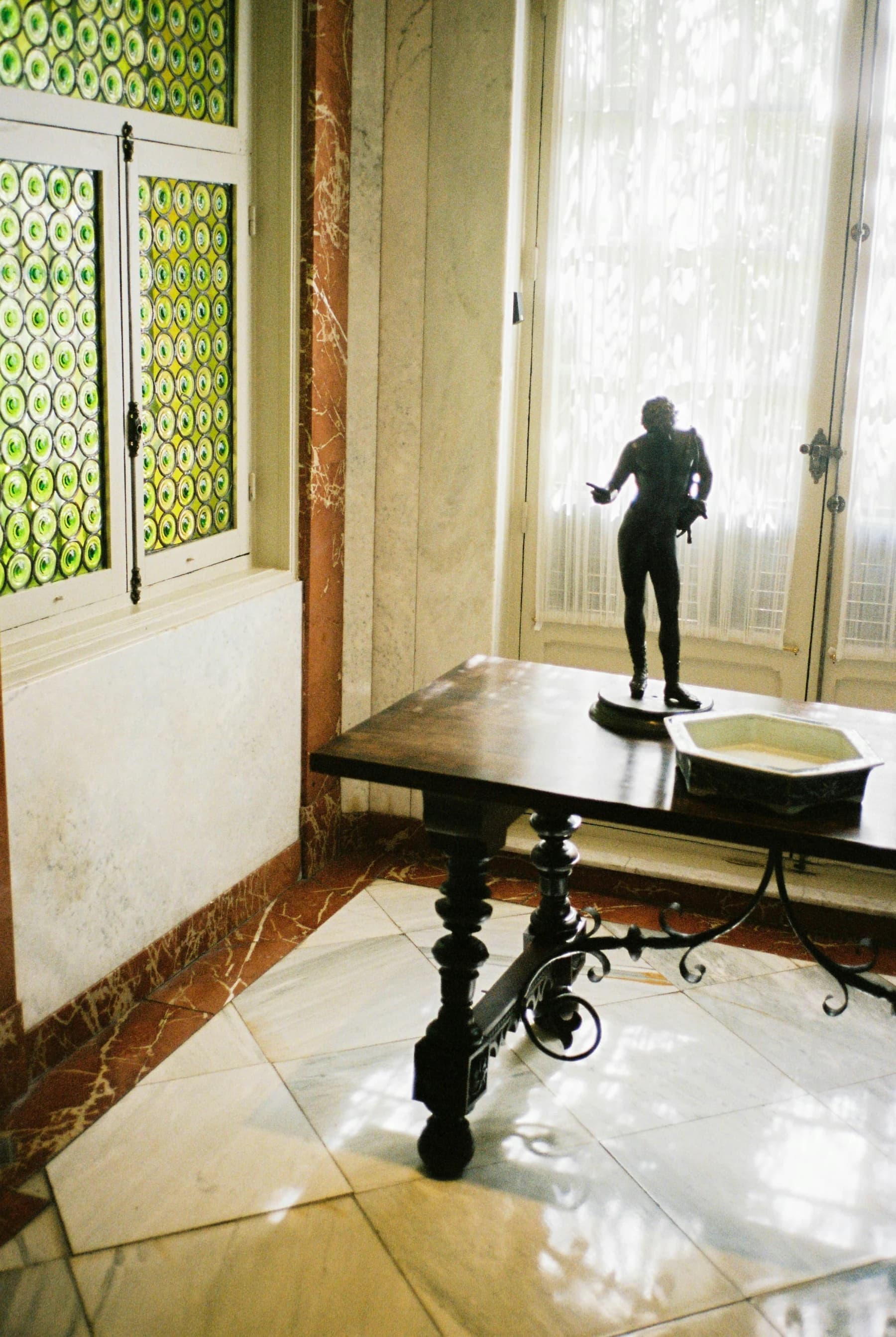
Renovating a Historic Italian Apartment Without Losing Its Soul
Preserve original moldings, doors, and floors while making the home livable — a design guide to historic apartments.
June 14, 2026 · 8 min read
Ready to start your Italian project?
Whether you are buying, renovating, or furnishing, ATRIA guides you every step with a bilingual team on the ground.
Request a consultation